Welcome speech quotes instantly transform your opening remarks from ordinary to extraordinary. These powerful statements from respected leaders help you connect with audiences, set the perfect tone, and create memorable first impressions that last long after your event ends.
Whether you’re opening a leadership conference, hosting a team meeting, or celebrating diversity, the right quote amplifies your message authentically. From Barack Obama to Maya Angelou, Simon Sinek to Steve Jobs, these carefully selected quotes cover every scenario—problem-solving, teamwork, change management, and employee appreciation. Your public speaking success starts with choosing quotes that resonate with your audience’s values and your event’s purpose.
Why Are Quotes Effective in Speeches and Presentations?
Quotes from respected public figures instantly add credibility to your ideas without requiring you to build that authority from scratch. When you reference Barack Obama, Maya Angelou, or Simon Sinek, you’re borrowing their reputation and the trust audiences already have in them. This technique works particularly well in American public speaking culture, where we value both data-driven arguments and emotional connection.
Research shows that people remember stories and quotes far longer than they remember statistics alone your audience might forget your five-point plan, but they’ll remember that powerful statement from Steve Jobs or Ruth Bader Ginsburg that made them feel something.
Beyond credibility, quotes create emotional resonance and help you emphasize key points without overexplaining. They serve as mental bookmarks in your presentation, giving your audience clear takeaways they can share with others. Think about the last great speech you heard chances are, you remember at least one quotable moment.
Read This Blog:
500+ Welcome Home Quotes – Heartfelt Messages for Return & Reunion 🏡💝
Quotes About Problem-Solving

Problem-solving quotes resonate deeply in American business culture because we celebrate practical solutions over theoretical discussions. When your team faces a significant challenge whether it’s a product failure, a client crisis, or an internal process breakdown these quotes remind everyone that obstacles contain opportunities.
I’ve seen these statements transform the energy in a room from defeated to determined, especially when you’re presenting client case studies or leading troubleshooting sessions. The beauty of problem-solving quotes is their universal applicability; they work equally well in tech startups, healthcare facilities, and manufacturing plants because every organization faces challenges that require creative thinking and persistent effort.
- 🎯 “To solve any problem, here are three questions to ask yourself: First, what could I do? Second, what could I read? And third, who could I ask?” — Jim Rohn
- 💡 “A problem well stated is a problem half-solved.” — Charles Kettering
- 🌟 “In every problem, there is an opportunity.” — John Adams
- 🔧 “Don’t find fault, find a remedy.” — Henry Ford
- 🎵 “A problem is a chance for you to do your best.” — Duke Ellington
- 🧠 “It’s not that I’m so smart, it’s just that I stay with problems longer.” — Albert Einstein
- 👁️ “The first step in solving a problem is to recognize that it does exist.” — Zig Ziglar
- ⚖️ “You’re either part of the solution or you’re part of the problem.” — Eldridge Cleaver
- 📚 “The first problem for all of us, men and women, is not to learn, but to unlearn.” — Gloria Steinem
- 💪 “All problems become smaller if you don’t dodge them but confront them.” — William Halsey
- 🔍 “The measure of success is not whether you have a tough problem to deal with, but whether it is the same problem you had last year.” — John Foster Dulles
- 🎭 “Every problem is a gift—without problems we would not grow.” — Anthony Robbins
- 🌊 “Problems are not stop signs, they are guidelines.” — Robert H. Schuller
- 🎨 “The best way to escape from a problem is to solve it.” — Alan Saporta
- 🚀 “When you can’t solve the problem, manage it.” — Robert H. Schuller
- 🎯 “A good solution applied with vigor now is better than a perfect solution applied ten minutes later.” — George S. Patton
- 💼 “Problems are only opportunities in work clothes.” — Henry J. Kaiser
- 🌈 “The greatest challenge to any thinker is stating the problem in a way that will allow a solution.” — Bertrand Russell
- 🔑 “Sometimes problems don’t require a solution to solve them; instead they require maturity to outgrow them.” — Steve Maraboli
- 🎪 “Life is not a problem to be solved, but a reality to be experienced.” — Søren Kierkegaard
When to Use Problem-Solving Quotes
These quotes shine brightest when you’re presenting client case studies that showcase how your team overcame significant obstacles. I’ve used them effectively at the opening of brainstorming sessions to set a solution-focused tone rather than dwelling on what went wrong. They’re particularly powerful in welcome speeches at events where problem-solving is the central theme, think innovation conferences, hackathons, or quality improvement summits.
You can also deploy these quotes when addressing team meetings after a project setback, helping redirect energy from blame toward constructive action. Industries like technology, healthcare, and manufacturing find these especially relevant because they face complex, high-stakes challenges daily that require both analytical thinking and creative approaches.
Quotes That Inspire Curiosity
Curiosity drives every major breakthrough in science, business, and technology. These quotes celebrate the questioning mindset that separates innovators from followers. When I use curiosity quotes in educational settings or tech conferences, I notice how they give people permission to ask “dumb questions” and explore ideas without fear of judgment.
James Clear captures this beautifully by connecting curiosity to both knowledge and action, reminding us that wondering isn’t enough we must follow through. American entrepreneurial culture particularly values this trait because our most successful companies from Google to SpaceX were built by people who refused to accept “that’s just how it’s done” as an answer.
- 🔥 “Curiosity is the beginning of knowledge. Action is the beginning of change.” — James Clear
- 💭 “Be less curious about people and more curious about ideas.” — Marie Curie
- ❓ “In modern society, most people have access to the same information. People are distinguished much more by the questions they ask than by the answers they have access to.” — James Pierce
- 🌍 “I don’t know anything, but I do know that everything is interesting if you go into it deeply enough.” — Richard Feynman
- 🎭 “The cure for boredom is curiosity. There is no cure for curiosity.” — Dorothy Parker
- ⚡ “Curiosity is insubordination in its purest form.” — Vladimir Nabokov
- 🤝 “Along with intellectual curiosity, we need interpersonal curiosity. Taking an interest in other people is the beginning of empathy.” — Adam Grant
- 🚀 “The day we stop exploring is the day we commit ourselves to live in a stagnant world, devoid of curiosity, empty of dreams.” — Neil deGrasse Tyson
- 🎓 “There are no foolish questions, and no man becomes a fool until he has stopped asking questions.” — Charles Proteus Steinmetz
- 🍎 “Stay hungry. Stay foolish.” — Steve Jobs
- 🔬 “The important thing is not to stop questioning. Curiosity has its own reason for existing.” — Albert Einstein
- 📖 “I have no special talents. I am only passionately curious.” — Albert Einstein
- 🌟 “Curiosity is the engine of achievement.” — Ken Robinson
- 🎨 “Wonder is the beginning of wisdom.” — Socrates
- 💡 “Judge a man by his questions rather than his answers.” — Voltaire
- 🌊 “Be brave enough to live creatively. The creative is the place where no one else has ever been.” — Alan Alda
- 🎯 “Millions saw the apple fall, but Newton asked why.” — Bernard Baruch
- 🔭 “Curiosity is lying in wait for every secret.” — Ralph Waldo Emerson
- 🎪 “The cure for Apple is not cost-cutting. The cure for Apple is to innovate its way out of its current predicament.” — Steve Jobs
- 🌈 “Children are remarkable for their intelligence and ardor, for their curiosity and tolerance of sheer novelty.” — Daniel Dennett
Best Occasions for Curiosity Quotes
Deploy these quotes at educational lectures and scientific keynotes where you’re encouraging exploration and questioning. I’ve found them incredibly effective at innovation-focused product launches, particularly when introducing AI tools or breakthrough technologies that challenge conventional thinking. Curiosity quotes work beautifully in welcome speeches at entrepreneurial events, tech conferences, and research symposiums where the audience gathers specifically to discover new ideas.
They’re also perfect for workshops on continued learning and professional development those sessions where you’re trying to reignite passion in experienced professionals who’ve fallen into routine patterns. The key is matching the intellectual tone of these quotes with audiences who value learning and growth rather than those primarily focused on execution and results.
Quotes About Leadership
Leadership quotes inspire action and followership because they articulate what great leaders do differently. When I deliver leadership training programs, I notice how quotes from figures like Barack Obama and Simon Sinek create instant recognition, people have heard these leaders speak and already trust their perspectives on guiding teams.
American leadership philosophy emphasizes servant leadership and empowerment over authoritarian control, which is why many of these quotes focus on taking care of people and enabling their success. Whether you’re celebrating employees for their leadership qualities or opening an annual leadership conference, these statements help crystallize abstract concepts into memorable principles that managers can actually apply.
- 🎤 “One voice can change a room.” — Barack Obama
- 💙 “Leadership is not about being in charge. It is about taking care of those in your charge.” — Simon Sinek
- 🎯 “Don’t tell people how to do things, tell them what to do and let them surprise you with their results.” — George Patton
- 🌟 “A leader takes people where they want to go. A great leader takes people where they don’t necessarily want to go, but ought to be.” — Rosalynn Carter
- ⚡ “The manager accepts the status quo; the leader challenges it.” — Warren Bennis
- 🔑 “People buy into the leader before they buy into the vision.” — John Maxwell
- 👁️ “If I have seen farther than others, it is because I was standing on the shoulder of giants.” — Isaac Newton
- 🌊 “A leader is best when people barely know he exists, when his work is done, his aim fulfilled, they will say: We did it ourselves.” — Lao Tzu
- 💪 “Become the kind of leader that people would follow voluntarily; even if you had no title or position.” — Brian Tracy
- 🎭 “The art of leadership is saying no, not saying yes. It is very easy to say yes.” — Tony Blair
- 🔍 “One of the tests of leadership is the ability to recognize a problem before it becomes an emergency.” — Arnold Glasow
- ⚖️ “Fight for the things that you care about, but do it in a way that will lead others to join you.” — Ruth Bader Ginsburg
- 🚀 “Contrary to popular belief, the best way to climb to the top of the ladder is to take others up there with you.” — Maria Eitel
- 🎨 “The greatest leader is not necessarily the one who does the greatest things. He is the one that gets the people to do the greatest things.” — Ronald Reagan
- 💡 “Leadership is influence.” — John C. Maxwell
- 🌈 “A good leader takes a little more than his share of the blame, a little less than his share of the credit.” — Arnold H. Glasow
- 🎪 “Before you are a leader, success is all about growing yourself. When you become a leader, success is all about growing others.” — Jack Welch
- 🔥 “The function of leadership is to produce more leaders, not more followers.” — Ralph Nader
- 🌟 “Leadership is not about titles, positions, or flowcharts. It is about one life influencing another.” — John C. Maxwell
- 🎯 “You don’t lead by pointing and telling people some place to go. You lead by going to that place and making a case.” — Ken Kesey
Perfect Moments for Leadership Quotes
Use these quotes in leadership training programs where you’re developing aspiring managers and team leaders. They work exceptionally well when announcing manager promotions or celebrating employees who’ve demonstrated strong leadership qualities. I’ve opened countless leadership conferences with these quotes because they immediately establish the event’s purpose and inspire attendees to think differently about their roles.
Corporate retreat openings benefit from leadership quotes that set an introspective tone, and mentorship program launches gain credibility when you reference respected leaders. These quotes also shine in succession planning presentations where you’re preparing the next generation of organizational leaders they help frame leadership as a learnable skill rather than an innate trait.
Quotes About Perseverance and Never Giving Up
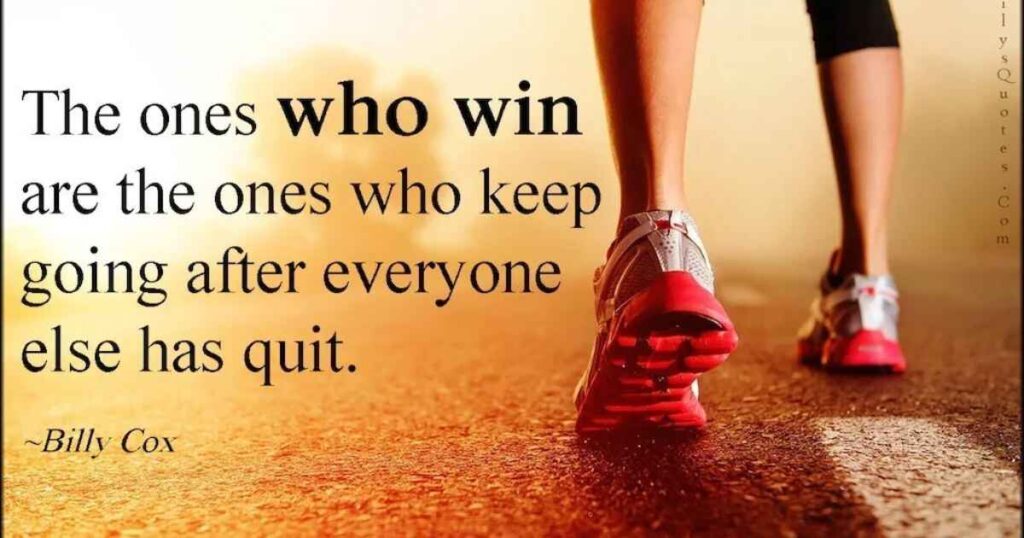
Resilience defines American success stories from Thomas Edison to J.K. Rowling. These perseverance quotes acknowledge that failure isn’t just possible it’s inevitable but what matters is how you respond. When I address team meetings during challenging times or staff meetings after significant setbacks, these quotes help reframe failure as feedback rather than finality.
The Japanese proverb about falling seven times and standing up eight has universal appeal because it’s visual and actionable. Kobe Bryant‘s competitive spirit resonates particularly well with sales teams and athletic groups, while Confucius offers a more philosophical perspective that appeals to academic audiences. The key is choosing quotes that match your audience’s current emotional state—some groups need fierce determination while others need gentle encouragement.
- 🥋 “Fall seven times and stand up eight.” — Japanese Proverb
- 🌅 “Courage doesn’t always roar. Sometimes courage is the quiet voice at the end of the day saying, ‘I will try again tomorrow.'” — Mary Anne Radmacher
- 🚶 “The journey of a thousand miles begins with one step.” — Lao Tzu
- 💫 “Believe you can and you’re halfway there.” — Theodore Roosevelt
- 📚 “It is impossible to live without failing at something unless you live so cautiously that you might as well not have lived at all, in which case you have failed by default.” — J.K. Rowling
- 🎯 “Our greatest glory is not in never failing, but in rising every time we fail.” — Confucius
- 🏀 “The moment you give up is the moment you let someone else win.” — Kobe Bryant
- 👣 “No matter how small the step, forward is forward.” — Mel Robbins
- 💡 “I have not failed. I’ve just found 10,000 ways that won’t work.” — Thomas Edison
- 🌟 “No matter how many mistakes you make or how slow you progress, you are still way ahead of everyone who isn’t trying.” — Tony Robbins
- 🔥 “Success is not final, failure is not fatal: it is the courage to continue that counts.” — Winston Churchill
- 🎭 “It’s not whether you get knocked down, it’s whether you get up.” — Vince Lombardi
- 🌊 “Perseverance is not a long race; it is many short races one after the other.” — Walter Elliot
- 🎨 “Never confuse a single defeat with a final defeat.” — F. Scott Fitzgerald
- 💪 “The oak fought the wind and was broken, the willow bent when it must and survived.” — Robert Jordan
- 🚀 “Perseverance is failing 19 times and succeeding the 20th.” — Julie Andrews
- 🌈 “When you come to the end of your rope, tie a knot and hang on.” — Franklin D. Roosevelt
- 🎪 “You just can’t beat the person who never gives up.” — Babe Ruth
- 🔑 “Character consists of what you do on the third and fourth tries.” — James A. Michener
- 💎 “The difference between a successful person and others is not a lack of strength, not a lack of knowledge, but rather a lack of will.” — Vince Lombardi
Strategic Uses for Perseverance Quotes
These quotes prove most valuable during team meetings when your organization faces challenging quarters or market conditions. I deploy them in staff meetings immediately following project failures or product launch disappointments to redirect emotional energy from despair toward determination.
They’re incredibly powerful at orientation sessions for PhD candidates or new students embarking on multi-year journeys—reminding them that the path will be difficult but worthwhile. When highlighting comeback stories or incredible success narratives, perseverance quotes provide the narrative framework that makes those stories resonate. Startup founder speeches benefit enormously from these quotes because entrepreneurship is fundamentally about surviving repeated failures, and athletic team pep talks use them to build mental toughness before competitions.
Quotes on Time Management and Productivity
Time equals money in American business culture, which makes time management and productivity quotes particularly resonant with professional audiences. Steven Covey‘s distinction between urgent and important tasks has become foundational to modern productivity thinking, while the Spanish proverb about tomorrow being the busiest day humorously captures our procrastination tendencies.
I’ve found these quotes especially effective when addressing teams struggling with productivity issues or introducing new AI tools designed to save time. Bruce Lee‘s philosophy about practicing one kick 10,000 times rather than 10,000 kicks once applies beautifully to focus and specialization discussions. Jack Ma‘s rabbit-catching metaphor resonates with entrepreneurs who face countless opportunities but limited resources to pursue them all.
- ⏰ “Tomorrow is often the busiest day of the week.” — Spanish Proverb
- 🎯 “Most of us spend too much time on what is urgent, and not enough time on what is important.” — Steven Covey
- 🐜 “It’s not enough to be busy, so are the ants. The question is, what are we busy about?” — Henry David Thoreau
- ⏱️ “Take care of the minutes and the hours will take care of themselves.” — Lord Chesterfield
- 📅 “You don’t need a new plan for next year. You need a commitment.” — Seth Godin
- 🥋 “I fear not the man who has practiced 10,000 kicks, but I do fear the man who has practiced one kick 10,000 times.” — Bruce Lee
- 🎻 “I have spent my days stringing and unstringing my instrument, while the song I came to sing remains unsung.” — Rabindranath Tagore
- ⏳ “A man who dares to waste one hour of life has not discovered the value of life.” — Charles Darwin
- 🔑 “Lack of time is actually lack of priorities.” — Timothy Ferris
- 🎭 “When everything is a priority, nothing is a priority.” — Simon Fulleringer
- 🐰 “If there are nine rabbits on the ground, if you want to catch one, just focus on one.” — Jack Ma
- 💡 “Time is what we want most, but what we use worst.” — William Penn
- 🌟 “The key is not to prioritize what’s on your schedule, but to schedule your priorities.” — Stephen Covey
- 🎯 “Until we can manage time, we can manage nothing else.” — Peter Drucker
- ⚡ “Don’t confuse activity with productivity. Many people are simply busy being busy.” — Robin Sharma
- 🔥 “Work smarter, not harder.” — Allan F. Mogensen
- 🌊 “The bad news is time flies. The good news is you’re the pilot.” — Michael Altshuler
- 🎨 “Efficiency is doing things right; effectiveness is doing the right things.” — Peter Drucker
- 💼 “Time is more valuable than money. You can get more money, but you cannot get more time.” — Jim Rohn
- 🚀 “Productivity is never an accident. It is always the result of a commitment to excellence, intelligent planning, and focused effort.” — Paul J. Meyer
When Time Management Quotes Hit Hardest
Deploy these quotes at productivity training sessions where you’re teaching specific techniques like the Eisenhower Matrix or time management frameworks. They work brilliantly at annual team meetings focused on goal-setting and priorities, helping everyone distinguish between busy work and meaningful progress.
I’ve used them effectively at software and AI tool launches where the entire value proposition centers on saving time the quotes establish why time matters before you demonstrate how your solution helps. Quarterly planning presentations benefit from these quotes because they force leadership teams to confront hard choices about resource allocation. Remote work policy discussions gain clarity from time management quotes that acknowledge how distributed teams need different structures than traditional office environments to stay productive.
Also Read This Blog:
Quotes About Teamwork and Collaboration
Collaboration beats solo efforts in virtually every complex endeavor. The African proverb about going far together rather than fast alone has become ubiquitous in corporate settings, yet it remains powerful because it captures an essential truth about human achievement. Simon Sinek offers a deeper insight by distinguishing teams based on trust rather than mere proximity, a critical distinction in our remote work era.
Helen Keller‘s observation about doing little alone but much together resonates across industries from manufacturing to software development. Phil Jackson‘s basketball wisdom about mutual strength applies perfectly to business teams where individual brilliance means little without coordination. Reid Hoffman‘s reminder that solo players always lose to teams speaks directly to competitive markets where no individual can master every necessary skill.
- 🌍 “If you want to go fast, go alone. If you want to go far, go together.” — African Proverb
- 🤝 “A team is not a group of people who work together. A team is a group of people who trust each other.” — Simon Sinek
- 🧠 “Those who work hard, work alone. Those who work smart, work as a team.” — Utibe Samuel Mbom
- ⚡ “An individual can make a change, but a team can make a revolution.” — Amit Kalantri
- 💡 “None of us is as smart as all of us.” — Ken Blanchard
- 📊 “The ratio of We’s to I’s is the best indicator of the development of a team.” — Lewis B. Ergen
- 💧 “Individually, we are one drop. Together, we are an ocean.” — Ryunosuke Satoro
- 🌟 “Alone we can do so little; together we can do so much.” — Helen Keller
- 🏀 “The strength of the team is each individual member. The strength of each member is the team.” — Phil Jackson
- 🎯 “No matter how brilliant your mind or strategy, if you’re playing a solo game, you’ll always lose out to a team.” — Reid Hoffman
- 🔥 “Talent wins games, but teamwork and intelligence win championships.” — Michael Jordan
- 🌊 “Coming together is a beginning, staying together is progress, and working together is success.” — Henry Ford
- 🎭 “Great things in business are never done by one person. They’re done by a team of people.” — Steve Jobs
- 🚀 “If everyone is moving forward together, then success takes care of itself.” — Henry Ford
- 💪 “The strength of the team is each individual member. The strength of each member is the team.” — Phil Jackson
- 🎨 “Unity is strength… when there is teamwork and collaboration, wonderful things can be achieved.” — Mattie Stepanek
- 🌈 “Many hands make light work.” — John Heywood
- 🔑 “Teamwork makes the dream work.” — John C. Maxwell
- 🎪 “Individual commitment to a group effort—that is what makes a team work, a company work, a society work, a civilization work.” — Vince Lombardi
- 💎 “Find a group of people who challenge and inspire you, spend a lot of time with them, and it will change your life.” — Amy Poehler
Ideal Settings for Teamwork Quotes
Use teamwork quotes before team-building activities to establish the purpose behind what might otherwise feel like forced fun. They’re perfect for project kick-off meetings with collaborators from different departments or organizations, helping establish shared purpose from day one. I frequently close conferences and events with teamwork quotes because they leave attendees feeling connected and motivated to continue collaboration beyond the formal gathering.
Cross-departmental initiative launches benefit enormously from these quotes, especially when you’re asking people to work outside their comfort zones with unfamiliar colleagues. Merger and acquisition announcements gain warmth from teamwork quotes that acknowledge how bringing organizations together creates something greater than either entity alone. Partnership formation events similarly use these quotes to celebrate the strategic decision to combine strengths.
Quotes that Recognize Hardwork (Employee Appreciation)
Recognition fuels motivation far more effectively than most leaders realize. These quotes celebrate the grinding, persistent effort that doesn’t always make headlines but ultimately determines organizational success. Robert Collier‘s observation about small efforts repeated daily captures the essence of compound growth, while Mark Cuban‘s emphasis on outworking and outlearning everyone resonates with ambitious professionals climbing their career ladders.
American hustle culture sometimes takes this too far, but genuine employee appreciation quotes acknowledge sacrifice without glorifying unhealthy workaholism. Dale Carnegie‘s wisdom about accomplishing important things when hope seemed lost speaks directly to teams who’ve survived difficult periods. Frank Ocean‘s advice to work hard in silence recognizes that the most effective contributors often aren’t the loudest voices in the room.
- 💼 “If you want something done, ask a busy person to do it.” — Lucille Ball
- 🔄 “Success is the sum of small efforts, repeated day in and day out.” — Robert Collier
- 🌟 “Most of the important things in the world have been accomplished by people who have kept on trying when there seemed to be no hope at all.” — Dale Carnegie
- 💪 “Perseverance is the hard work you do after you get tired of doing the hard work you already did.” — Newt Gingrich
- 🎯 “It’s not about money or connections. It’s the willingness to outwork and outlearn everyone.” — Mark Cuban
- ⚡ “The difference between try and triumph is just a little umph!” — Marvin Phillip
- 🚀 “Success usually comes to those who are too busy to be looking for it.” — Henry David Thoreau
- 🤫 “Work hard in silence, let success be your noise.” — Frank Ocean
- 🔥 “There are no secrets to success. It is the result of preparation, hard work, and learning from failure.” — Colin Powell
- 💡 “Opportunity is missed by most people because it is dressed in overalls and looks like work.” — Thomas Edison
- 🌊 “Hard work beats talent when talent doesn’t work hard.” — Tim Notke
- 🎭 “Without hard work, nothing grows but weeds.” — Gordon B. Hinckley
- 🏆 “I’m a greater believer in luck, and I find the harder I work the more I have of it.” — Thomas Jefferson
- 🎨 “The only place where success comes before work is in the dictionary.” — Vidal Sassoon
- 💎 “Genius is 1% inspiration and 99% perspiration.” — Thomas Edison
- 🌈 “There is no substitute for hard work.” — Thomas Edison
- 🔑 “Hard work without talent is a shame, but talent without hard work is a tragedy.” — Robert Half
- 🎪 “I never dreamed about success. I worked for it.” — Estée Lauder
- 🌟 “The only way to do great work is to love what you do.” — Steve Jobs
- 🚀 “Things may come to those who wait, but only the things left by those who hustle.” — Abraham Lincoln
Perfect Moments for Employee Appreciation Quotes
These quotes belong at award ceremonies and recognition events where you’re celebrating specific individuals or teams. I use them in team appreciation speeches following major project completions or during particularly demanding periods. Welcome speeches at company annual conferences gain warmth when you acknowledge the collective hard work that made the gathering possible.
When introducing guest speakers known for exceptional work ethic, these quotes establish their credibility before they even take the stage. Year-end recognition events benefit from employee appreciation quotes that reflect on sustained effort throughout challenging times. Retirement celebration addresses use these quotes to honor decades of contribution, and promotion announcements acknowledge the work that earned someone their advancement rather than treating success as accidental.
Quotes About Managing Change
Change is constant in modern business yet remains emotionally challenging for most people. These change management quotes help audiences accept that discomfort accompanies growth and that resisting inevitable shifts wastes energy better spent adapting. Maya Angelou‘s wisdom about changing attitudes when you can’t change circumstances offers practical advice for individuals feeling powerless.
Barack Obama‘s reminder that we are the change we seek puts responsibility squarely on each person rather than waiting for external rescue. Charles Darwin‘s observation about responsiveness to change not strength or intelligence determining survival applies perfectly to organizations facing disruption. Steve Jobs‘ celebration of crazy thinkers who believe they can change the world validates the uncomfortable proposals that often turn out to be breakthrough ideas. Rumi‘s progression from wanting to change the world to changing himself describes the maturation process many leaders experience.
- 👁️ “The first step toward change is awareness. The second step is acceptance.” — Nathaniel Branden
- 🌱 “In any given moment, we have two options: to step forward into growth or step back into safety.” — Abraham Maslow
- 🚀 “You never change your life until you step out of your comfort zone; change begins at the end of your comfort zone.” — Roy T. Bennett
- 💫 “If you don’t like something, change it. If you can’t change it, change your attitude.” — Maya Angelou
- 🍎 “The people who are crazy enough to think they can change the world are the ones who do.” — Steve Jobs
- ⚡ “Change will not come if we wait for some other person or some other time. We are the ones we’ve been waiting for. We are the change that we seek.” — Barack Obama
- 🦋 “It is not the strongest of the species that survive, nor the most intelligent, but the one most responsive to change.” — Charles Darwin
- 🛤️ “If you don’t like the road you’re walking, start paving another one.” — Dolly Parton
- 🌊 “Any change, even a change for the better, is always accompanied by discomforts.” — Arnold Bennett
- 🕊️ “Yesterday I was clever, so I wanted to change the world. Today I am wise, so I am changing myself.” — Rumi
- 🌟 “The greatest discovery of all time is that a person can change his future by merely changing his attitude.” — Oprah Winfrey
- 🎭 “Our dilemma is thatwe hate change and love it at the same time; what we really want is for things to remain the same but get better.” — Sydney J. Harris
- 🔥 “Change is the law of life. And those who look only to the past or present are certain to miss the future.” — John F. Kennedy
- 🎯 “Progress is impossible without change, and those who cannot change their minds cannot change anything.” — George Bernard Shaw
- 💡 “The secret of change is to focus all of your energy not on fighting the old, but on building the new.” — Socrates
- 🌈 “Change before you have to.” — Jack Welch
- 🔑 “Everyone thinks of changing the world, but no one thinks of changing himself.” — Leo Tolstoy
- 🎨 “Be the change that you wish to see in the world.” — Mahatma Gandhi
- 🚀 “There is nothing permanent except change.” — Heraclitus
- 💎 “Without change, something sleeps inside us, and seldom awakens.” — Duke Ellington
When Change Management Quotes Work Best
Deploy these quotes during organizational restructuring announcements when anxiety runs high and employees need reassurance that change can lead somewhere positive. I’ve found them incredibly effective when introducing new software or AI tools that will fundamentally alter how people work the quotes validate the discomfort while emphasizing necessity.
Welcome speeches at leadership, management, or healthcare conferences often address change management because these fields face constant evolution from regulations, technologies, and best practices. Industry disruption presentations benefit from change quotes that help audiences see threats as opportunities. Pivot strategy discussions use these quotes to reframe what might feel like failure into necessary adaptation. Digital transformation initiatives succeed more often when leaders acknowledge the emotional journey of change rather than treating it as purely technical implementation.
Funny and Light-Hearted Quotes
Humor breaks tension effectively without diminishing the importance of your message. These lighter quotes work because they acknowledge shared frustrations and make your audience feel understood rather than lectured. Thomas Sowell‘s observation about people who enjoy meetings resonates universally in corporate America where calendar bloat drains productivity.
Douglas Adams‘ line about loving the whooshing sound of passing deadlines gets genuine laughs because everyone has experienced that particular failure. Henry Kissinger‘s fully scheduled crisis calendar captures the absurdity of modern professional life where we’re simultaneously overwhelmed and convinced we can handle one more thing. Jim Carrey‘s comment about women rolling their eyes behind great men works because it punctures male ego without being mean-spirited. These quotes prove you don’t need to be serious constantly to convey serious ideas.
- 😄 “People who enjoy meetings should not be in charge of anything.” — Thomas Sowell
- 📖 “Bad decisions make good stories.” — Ellis Vidler
- 📅 “There cannot be a crisis next week. My schedule is already full.” — Henry Kissinger
- 👶 “Adults are always asking children what they want to be when they grow up because they’re looking for ideas.” — Paula Poundstone
- 👀 “Behind every great man is a woman rolling her eyes.” — Jim Carrey
- 🔤 “Change is not a four-letter word… but often your reaction to it is!” — Jeffrey Gitomer
- 🎯 “Leadership is the art of getting someone else to do something you want done because he wants to do it.” — Dwight D. Eisenhower
- ⏰ “I love deadlines. I like the whooshing sound they make as they fly by.” — Douglas Adams
- ☕ “I’m not procrastinating. I’m doing side quests.” — Unknown
- 💼 “The trouble with being punctual is that nobody’s there to appreciate it.” — Franklin P. Jones
- 🎭 “I always arrive late at the office, but I make up for it by leaving early.” — Charles Lamb
- 🌟 “Hard work never killed anybody, but why take a chance?” — Edgar Bergen
- 📊 “If at first you don’t succeed, redefine success.” — Unknown
- 🔥 “The best time to plant a tree was 20 years ago. The second best time is now. The third best time is after coffee.” — Unknown
- 🎨 “I choose a lazy person to do a hard job because a lazy person will find an easy way to do it.” — Bill Gates
- 🚀 “Teamwork is important; it helps to put the blame on someone else.” — Unknown
- 💡 “My brain has too many tabs open.” — Unknown
- 🌊 “I’m not saying I hate my job, but if a meteor hit the building, I wouldn’t run.” — Unknown
- 🎪 “The road to success is dotted with many tempting parking spaces.” — Will Rogers
- 🔑 “Doing nothing is hard. You never know when you’re done.” — Unknown
Smart Ways to Use Funny Quotes
Inject these quotes as icebreakers at conferences where attendees don’t know each other yet and need permission to relax. Casual Friday team meetings benefit from humor that acknowledges everyone’s ready for the weekend. Award night entertainment segments use funny quotes to maintain energy between formal recognitions, preventing the event from becoming tediously serious.
When addressing sensitive topics like cost of living adjustments or benefit reductions, appropriate humor can soften the blow without trivializing concerns. Post-lunch presentation openings combat the afternoon energy slump with laughter that re-engages wandering attention. Holiday party speeches traditionally incorporate humor because the context already skews casual, and trying to be overly serious would feel tone-deaf to the celebratory atmosphere.
Quotes About Effective Communication
Communication breakdowns cost businesses millions annually through misunderstandings, duplicated efforts, and damaged relationships. George Bernard Shaw‘s insight about the illusion of communication hits hard because we constantly assume our messages landed when they didn’t. Maya Angelou‘s reminder that people remember how you made them feel rather than what you said should fundamentally reshape how we approach difficult conversations.
Peter Drucker recognized that hearing what isn’t said matters more than processing explicit messages a skill that separates exceptional leaders from mediocre ones. Brené Brown elevated storytelling by describing stories as data with soul, validating narrative approaches in business contexts that previously privileged pure analytics. Chris Anderson captured the public speaker’s core mission: rebuilding your passion inside listeners’ minds rather than simply transmitting information.
- 💬 “When ideas are communicated effectively, people follow and change.” — Nancy Duarte
- 🎤 “Your number-one mission as a speaker is to take something that matters deeply to you and to rebuild it inside the minds of your listeners.” — Chris J. Anderson
- 🔄 “Communication works for those who work at it.” — John Powell
- 🎭 “The single biggest problem in communication is the illusion that it has taken place.” — George Bernard Shaw
- 📢 “If you are given only one opportunity to speak, be certain your voice is heard.” — Elizabeth Gilbert
- 👂 “The most important thing in communication is hearing what isn’t said.” — Peter Drucker
- 🎯 “The first problem of communication is getting people’s attention.” — Chip Heath
- 📖 “Great stories happen to those who can tell them.” — Ira Glass
- 💫 “Stories are just data with a soul.” — Brené Brown
- 💙 “People will forget what you said, people will forget what you did, but people will never forget how you made them feel.” — Maya Angelou
- 🚫 “Two monologues do not make a dialogue.” — Jeff Daly
- 🌟 “The art of communication is the language of leadership.” — James Humes
- 🔑 “To effectively communicate, we must realize that we are all different in the way we perceive the world and use this understanding as a guide to our communication with others.” — Tony Robbins
- 🎨 “Think like a wise man but communicate in the language of the people.” — William Butler Yeats
- 💡 “Good communication is as stimulating as black coffee and just as hard to sleep after.” — Anne Morrow Lindbergh
- 🌊 “Speak clearly, if you speak at all; carve every word before you let it fall.” — Oliver Wendell Holmes
- 🔥 “We have two ears and one mouth so that we can listen twice as much as we speak.” — Epictetus
- 🎪 “Communication is a skill that you can learn. It’s like riding a bicycle or typing. If you’re willing to work at it, you can rapidly improve the quality of every part of your life.” — Brian Tracy
- 🌈 “The way we communicate with others and with ourselves ultimately determines the quality of our lives.” — Tony Robbins
- 🎯 “Words are free. It’s how you use them that may cost you.” — KushandWizdom
Optimal Uses for Communication Quotes
These quotes belong in public speaking workshops and communication skills training where you’re explicitly teaching techniques for clearer expression. Customer service training programs benefit enormously from communication quotes that emphasize empathy and active listening over scripted responses. When addressing meetings focused on resolving miscommunication between departments or team members, these quotes help everyone recognize their role in the breakdown rather than simply blaming others.
Welcome speeches at Toastmasters conferences naturally incorporate communication quotes since the entire organization exists to develop speaking skills. Corporate communication policy rollouts use these quotes to explain why new standards matter—not as bureaucratic burden but as investment in organizational effectiveness. Conflict resolution sessions gain perspective from quotes acknowledging that genuine dialogue requires more than taking turns speaking.
Quotes About Building Confidence and Overcoming Self-Doubt
Imposter syndrome affects high achievers disproportionately because capability doesn’t automatically translate to confidence. Theodore Roosevelt‘s assertion that believing you can puts you halfway there offers hope to those paralyzed by self-doubt. Mel Robbins redefines confidence as willingness to try rather than certainty of success a distinction that frees people from waiting until they feel ready. Venus Williams suggests pretending confidence until it becomes real, acknowledging that action precedes feeling rather than following it.
Mark Manson‘s observation that confidence means comfort with failure rather than expectation of success reframes the entire concept away from bravado toward resilience. Brené Brown reminds us that courage starts with showing up despite vulnerability, a message that resonates deeply in American professional culture where admitting uncertainty often feels like weakness.
- 💎 “Everything you could possibly ever want, have, or need is right here inside of you.” — Kristin McGee
- 🥊 “They can knock you down, but they can never knock you out.” — Kendall Toole
- 🎾 “Just believe in yourself. Even if you don’t, pretend that you do, and at some point, you will.” — Venus Williams
- ⭐ “Believe you can and you’re halfway there.” — Theodore Roosevelt
- 👑 “She remembered who she was and the game changed.” — Lalah Delia
- 🎯 “Confidence is not a belief in success. It’s a comfort with failure.” — Mark Manson
- 💪 “Courage starts with showing up and letting ourselves be seen.” — Brené Brown
- 🌟 “If we all did the things we are capable of doing, we would literally astound ourselves.” — Thomas Edison
- 🚀 “Confidence is not the belief in oneself. Confidence is the willingness to try.” — Mel Robbins
- 💫 “Confidence is not, ‘They will like me.’ Confidence instead is, ‘I’ll be fine if they don’t.'” — Christina Grimmie
- 🔥 “You wouldn’t worry so much about what others think of you if you realized how seldom they do.” — Eleanor Roosevelt
- 🎭 “The moment you doubt whether you can fly, you cease forever to be able to do it.” — J.M. Barrie
- 🌊 “Confidence comes not from always being right but from not fearing to be wrong.” — Peter T. McIntyre
- 🎨 “Don’t wait until everything is just right. It will never be perfect. There will always be challenges, obstacles and less than perfect conditions.” — Mark Victor Hansen
- 💡 “Optimism is the faith that leads to achievement. Nothing can be done without hope and confidence.” — Helen Keller
- 🌈 “With confidence, you have won before you have started.” — Marcus Garvey
- 🔑 “Low self-confidence isn’t a life sentence. Self-confidence can be learned, practiced, and mastered.” — Barrie Davenport
- 🎪 “No one can make you feel inferior without your consent.” — Eleanor Roosevelt
- 🌟 “Talk to yourself like you would to someone you love.” — Brené Brown
- 🚀 “You are braver than you believe, stronger than you seem, and smarter than you think.” — A.A. Milne
Prime Opportunities for Confidence Quotes
Use these quotes in entrepreneur pitch coaching sessions where founders must project confidence despite uncertainty. Confidence-building workshops and public speaking anxiety programs benefit from quotes that normalize self-doubt while providing paths forward. Motivational speeches for professionals facing career transitions whether lateral moves or promotions into unfamiliar territory gain strength from these quotes.
Women in leadership conferences often address confidence gaps that research shows affect women differently than men, making these quotes particularly valuable. First-time manager training acknowledges the impostor feelings new leaders experience when suddenly responsible for others’ work. New graduate orientation programs use confidence quotes to reassure young professionals that feeling overwhelmed doesn’t mean you’re inadequate, it means you’re stretching into new capabilities.
Quotes on Diversity and Inclusion
DEI initiatives shape modern workplaces because research consistently shows that diverse teams make better decisions and drive innovation. Verna Myers‘ distinction between diversity (being invited to the party) and inclusion (being asked to dance) has become foundational to understanding that representation alone doesn’t create belonging. Marian Wright Edelman‘s observation that you can’t be what you can’t see explains why visibility matters for underrepresented groups pursuing ambitious careers.
Sundar Pichai makes the business case that diverse voices lead to better discussions and outcomes appealing to leaders focused on competitive advantage beyond ethical considerations. Martin Luther King Jr.‘s interconnection principle reminds us that injustice anywhere threatens justice everywhere, applying his civil rights wisdom to organizational contexts. Maya Angelou‘s tapestry metaphor celebrates how different threads create beauty precisely because of their variety rather than despite it.
- 👁️ “You can’t be what you can’t see.” — Marian Wright Edelman, Founder, Children’s Defense Fund
- 🌈 “Diversity doesn’t look like anyone. It looks like everyone.” — Karen Draper, Author
- 🔗 “Whatever affects one directly, affects all indirectly.” — Martin Luther King Jr.
- 🎨 “We all should know that diversity makes for a rich tapestry, and we must understand that all the threads of the tapestry are equal in value no matter what their color.” — Maya Angelou
- 💃 “Diversity is being invited to the party; inclusion is being asked to dance.” — Verna Myers, Vice President of Inclusion at Netflix
- 🚪 “Equality is leaving the door open for anyone who has the means to approach it; equity is ensuring there is a pathway to that door for those who need it.” — Caroline Belden, The Inclusion Solution
- ➕ “We are greater than, and greater for, the sum of us.” — Heather McGhee, Author
- ⚖️ “The difference between equity and equality is that equality is when everyone gets the same thing, and equity is when everyone gets the things they deserve.” — DeRay Mckesson, Civil Rights Activist
- 💬 “A diverse mix of voices leads to better discussions, decisions, and outcomes for everyone.” — Sundar Pichai, CEO, Google
- 🌺 “A garden’s beauty never lies in one flower.” — Matshona Dhliwayo, Author
- 🤝 “No matter who we are or what we look like or what we may believe, it is both possible and, more importantly, it becomes powerful to come together in common purpose and common effort.” — Oprah Winfrey
- 🌍 “Diversity is the one true thing we all have in common. Celebrate it every day.” — Unknown
- 🎯 “We need diversity of thought in the world to face the new challenges.” — Tim Berners-Lee
- 💡 “Diversity is not about how we differ. Diversity is about embracing one another’s uniqueness.” — Ola Joseph
- 🌟 “If we cannot now end our differences, at least we can help make the world safe for diversity.” — John F. Kennedy
- 🔥 “Strength lies in differences, not in similarities.” — Stephen Covey
- 🎭 “It is time for parents to teach young people early on that in diversity there is beauty and there is strength.” — Maya Angelou
- 🌊 “Diversity: the art of thinking independently together.” — Malcolm Forbes
- 🎪 “We should acknowledge differences; we should greet differences, until difference makes no difference anymore.” — Adela A. Allen
- 💎 “Our ability to reach unity in diversity will be the beauty and the test of our civilization.” — Mahatma Gandhi
Meaningful Contexts for Diversity Quotes
These quotes belong in diversity and inclusion training where you’re explicitly addressing bias, privilege, and belonging. Multicultural celebration events use these quotes to articulate why diversity matters beyond surface-level representation. Hiring policy announcement speeches gain moral clarity from quotes that connect fair practices to organizational values and business outcomes.
Employee resource group launches benefit from diversity quotes that validate the need for affinity spaces within larger organizations. Community partnership initiatives use these quotes when explaining why companies invest resources in underserved populations. Heritage month observances like Black History Month or Pride Month incorporate these quotes to connect celebration with ongoing commitment to inclusion rather than treating diversity as occasional acknowledgment.
Quotes About Learning from Mistakes and Doing Better
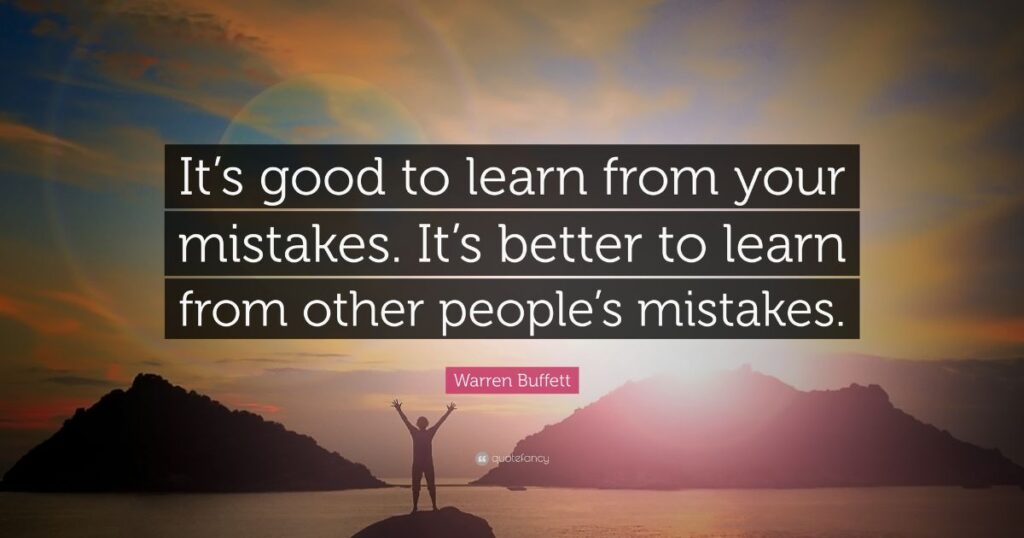
Failure fuels American innovation stories from Thomas Edison to modern Silicon Valley founders who celebrate “failing fast” as iteration strategy. Maya Angelou‘s wisdom about doing better when you know better offers both accountability and grace acknowledging past mistakes while demanding future improvement.
James Clear frames every action as a vote for who you’re becoming, making each small choice meaningful in the larger project of self-creation. Sara Blakely encourages embracing what you don’t know as potential strength rather than shameful weakness, particularly valuable for founders entering unfamiliar territory. Paulo Coelho distinguishes regret from learning, arguing that mistakes prove we dared to leave comfort zones. Kevin Kelly‘s observation that pros are just amateurs who recover gracefully normalizes imperfection and emphasizes resilience over initial perfection.
- 🎯 “Start where you are. Use what you have. Do what you can.” — Arthur Ashe
- 📚 “Learn from mistakes, but never regret you made them. We make mistakes because we dare to step outside our comfort zone.” — Paulo Coelho
- 🗳️ “Every action you take is a vote for the type of person you wish to become.” — James Clear
- 🎭 “If I had to live my life again, I’d make the same mistakes, only sooner.” — Tallulah Bankhead
- 🎨 “Pros are just amateurs who know how to gracefully recover from their mistakes.” — Kevin Kelly
- 💡 “Don’t be intimidated by what you don’t know. That can be your greatest strength and ensure that you do things differently from everyone else.” — Sara Blakely
- 🌱 “Mistakes are the proof that we are human and flawed, but also capable of growth and improvement.” — Brené Brown
- 🚀 “Start by doing what’s necessary, then do what’s possible, and suddenly you are doing the impossible.” — Francis of Assisi
- 😰 “The greatest mistake you can make in life is to continually be afraid you will make one.” — Elbert Hubbard
- 🌟 “Do the best you can until you know better. Then when you know better, do better.” — Maya Angelou
- 🔥 “Failure is simply the opportunity to begin again, this time more intelligently.” — Henry Ford
- 🎯 “I’ve missed more than 9,000 shots in my career. I’ve lost almost 300 games. 26 times I’ve been trusted to take the game-winning shot and missed. I’ve failed over and over and over again in my life. And that is why I succeed.” — Michael Jordan
- 💪 “There are no mistakes, only opportunities for learning.” — Tina Fey
- 🌊 “Mistakes are the portals of discovery.” — James Joyce
- 🎪 “Anyone who has never made a mistake has never tried anything new.” — Albert Einstein
- 💎 “Experience is simply the name we give our mistakes.” — Oscar Wilde
- 🌈 “It’s fine to celebrate success, but it is more important to heed the lessons of failure.” — Bill Gates
- 🔑 “Failure is success in progress.” — Albert Einstein
- 🎨 “The only real mistake is the one from which we learn nothing.” — Henry Ford
- 🚀 “Mistakes are great, the more I make the smarter I get.” — R. Buckminster Fuller
Strategic Applications for Mistake-Learning Quotes
Use these quotes in company review meetings following project failures or product launch disappointments to shift focus from blame toward learning. Presentations addressing shortcomings or mistakes benefit from quotes that normalize imperfection while demanding improvement rather than excuse-making.
Quality improvement initiatives use these quotes to create psychologically safe environments where people report errors rather than hiding them. Post-project analysis presentations gain perspective from quotes reminding everyone that perfect execution is unrealistic but continuous improvement is achievable. Performance review conversations become more constructive when framed around growth from mistakes rather than punishment for failures. Innovation failure celebrations increasingly common in tech culture use these quotes to explicitly honor valuable lessons learned from experiments that didn’t work as hoped.
Must Be Read This Blog:
How to Choose the Right Speech Quote for Your Occasion
Choosing the perfect quote requires understanding your audience demographics, industry context, and event purpose simultaneously. You wouldn’t use the same leadership quote at a healthcare conference that you’d use at a startup pitch competition even though both audiences value leadership. Consider whether your listeners skew young and tech-savvy or older and traditional, as generational differences affect which public figures carry authority.
Industry jargon matters too; financial services professionals respond differently to risk-related quotes than creative agency teams do. Authenticity beats forced inspiration every single time, so if a quote doesn’t genuinely resonate with you personally, your delivery will feel hollow no matter how objectively powerful the words are. Test whether the quote aligns with your core message rather than just sounding impressive in isolation a mismatch between your quote and your content confuses audiences instead of enlightening them.
Conclusion
Welcome speech quotes transform ordinary greetings into memorable moments that resonate long after your event ends. These powerful statements from respected leaders help you connect with audiences instantly, set the perfect tone, and create lasting impressions.
Whether you’re opening leadership conferences, team meetings, or diversity celebrations, the right quote amplifies your message authentically. Remember to choose quotes that align with your event’s purpose and your personal speaking style. Fact-check attributions, practice natural delivery, and let these words enhance rather than replace your original ideas. Your next unforgettable welcome speech starts here.
Frequently Asked Questions
What is a welcome speech quote?
A welcome speech quote is a powerful statement from a respected figure used at the beginning of an event to set the tone and inspire your audience.
How do I choose the best quote for my welcome speech?
Match the quote to your event’s theme, audience demographics, and purpose while ensuring it feels authentic to your personal speaking style.
Should I use multiple quotes in one welcome speech?
No, stick to one powerful quote for most welcome speeches to maintain focus and impact rather than diluting your message with multiple statements.
When should I deliver the quote in my welcome speech?
Deliver your quote near the beginning after brief introductions to immediately establish your event’s tone and capture audience attention effectively.
Do I need to explain the quote after saying it?
Yes, briefly connect the quote to your event’s purpose and explain why it matters to help your audience understand its relevance clearly.