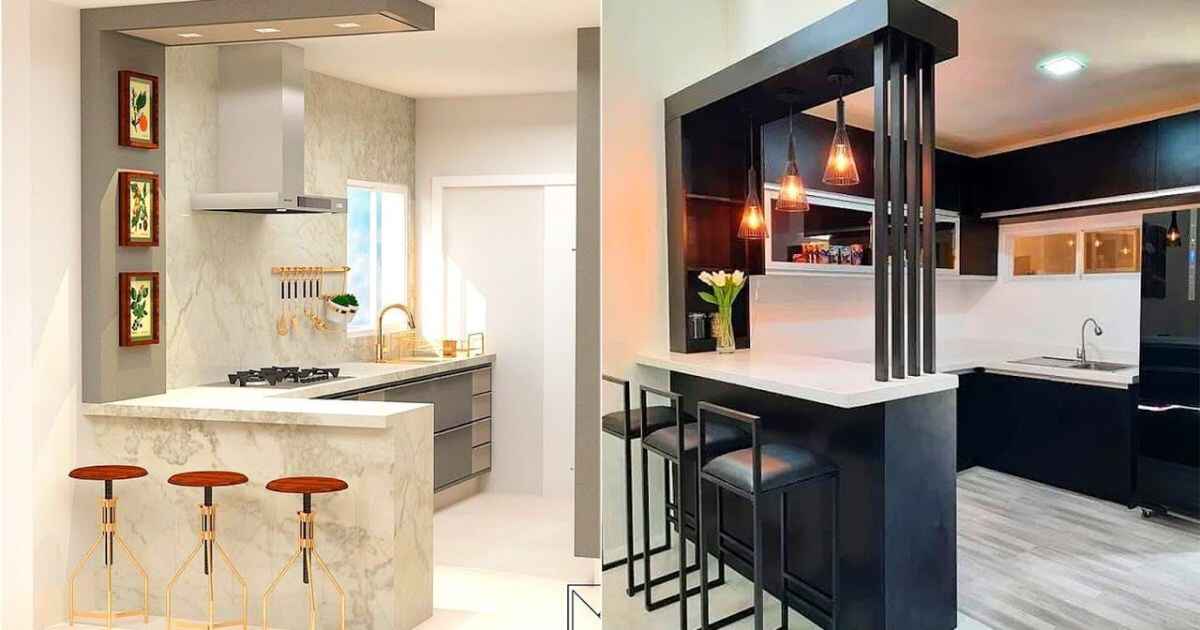
The closed kitchen trend comeback refers to the return of separated kitchen spaces in modern home design. Unlike open floor plans where kitchens connect to living room areas, closed kitchens have walls and doors. This classic layout is gaining popularity again as homeowners rediscover its practical benefits and cozy appeal.
Imagine cooking without worrying about kitchen mess being visible to your guests. Picture a quiet space where cooking sounds stay contained and don’t disturb family movie time. The closed floor kitchen offers privacy, peace, and a dedicated culinary sanctuary that many homeowners now crave.
Closed kitchens are trending in 2025 because they solve real problems that open layouts created. They reduce noise, hide clutter, and provide more wall space for storage and decoration. Homeowners appreciate the intimate atmosphere and the freedom to cook without feeling watched or rushed.
Understanding the Closed Kitchen Renaissance
For nearly two decades, open floor plans dominated American home design. Builders knocked down walls faster than you could say “great room.” Everyone wanted that airy, connected feeling where you could flip pancakes while watching TV. Dining area spaces merged seamlessly with kitchens. The boundaries between rooms blurred until homes felt like one massive space. But something shifted. Homeowners started realizing that infinite openness came with unexpected costs.
The pendulum is swinging back toward defined spaces and 2025 marks a turning point. Design experts noticed this shift starting around 2023, but the movement gained serious momentum recently. Closed floor kitchens aren’t your grandmother’s cramped cooking quarters though. They’re sophisticated, well-designed spaces that combine the best of traditional layouts with modern amenities.
Young professionals buying their first homes are choosing closed kitchens. Empty nesters renovating for their golden years are adding walls back. Even families with children are reconsidering whether they truly need to watch their kids from the stove.
Why these kitchens are a trending style in 2025
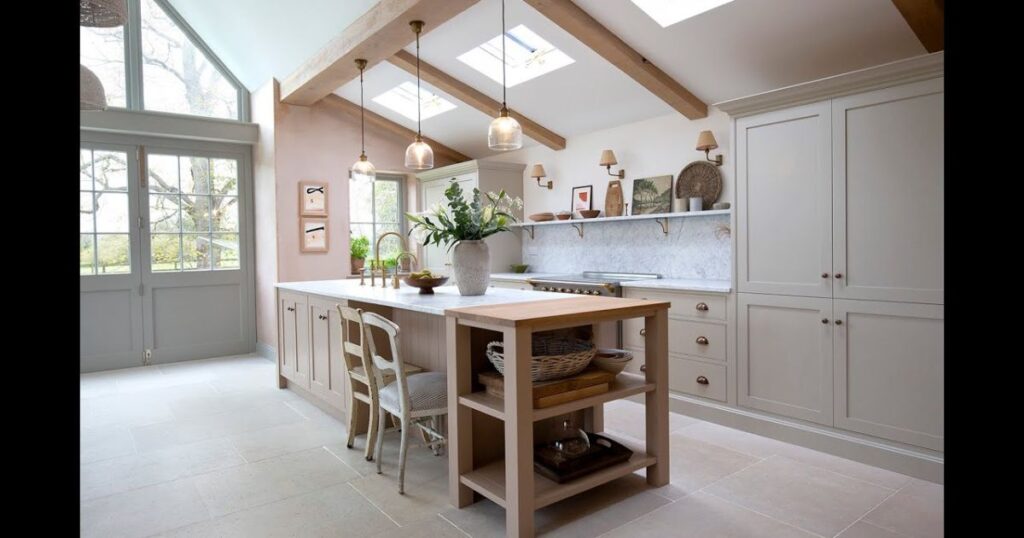
So what’s driving this dramatic reversal? The reasons go deeper than simple nostalgia. People spent more time at home during recent years and discovered something crucial about their living spaces.
That open floor plan everyone coveted? It wasn’t working as beautifully as the magazines promised. The fantasy of effortless entertaining collided with the reality of visible sink disasters and echoing blender noise at 6 AM.
Real-world experience taught us valuable lessons about how we actually live versus how we think we should live. Remote work changed everything too. When your living room doubles as your office and your kitchen becomes your lunch spot, you need boundaries. You need doors that close. You need spaces that serve distinct purposes rather than one room trying to be everything.
The closed kitchen trend comeback responds directly to these modern lifestyle demands. It’s not about going backward but about moving forward with wisdom gained from the open floor plans experiment.
Here are 6 reasons why these kitchen designs are so hot right now:
Increased Privacy
Stands as the number one reason people are embracing closed floor kitchens again. When you’re cooking an elaborate meal, you don’t want an audience critiquing every move. Maybe you’re following a new recipe and things aren’t going smoothly. Perhaps you’re defrosting chicken at the last minute because dinner planning failed.
A closed kitchen gives you the freedom to work without judgment. Design expert Lindsay Fluckiger emphasizes this advantage in her work on kitchen transformations. She notes that home cooks consistently report feeling less stressed when they can prep meals privately. For people who love entertaining, this privacy paradoxically makes hosting easier. You can prepare appetizers without guests crowding the kitchen island or asking if they can help every five minutes. Your dining area becomes the social zone while your kitchen remains your workspace.
This separation creates better flow during gatherings. Guests relax in comfortable seating while you finish touches without pressure. The oven hood can run at full blast without disturbing conversations. Your countertops can be messy mid-recipe without embarrassment. When dinner’s ready, you emerge triumphant with perfectly plated dishes rather than having everyone watch your chaotic process.
Superior Noise Reduction
Makes closed kitchens absolutely essential for many households today. Modern appliances are powerful but loud. Your dishwasher sounds like a jet engine. The garbage disposal could wake the dead. A quality blender for morning smoothies rivals construction equipment. In an open floor plan, these sounds invade every corner of your home. Someone’s watching a movie? Too bad, the dishwasher just started its two-hour cycle. Baby finally sleeping? Hope nobody needs to run the food processor. Working from home with important video calls? Better plan meals around your meeting schedule.
Closed floor kitchen plans solve these acoustic nightmares completely. Closing a door contains 70-80% of kitchen noise depending on your door quality and wall construction. Families with multiple schedules particularly benefit. Night shift workers can sleep while others prepare lunch. Early risers can brew coffee without disturbing teenagers.
Remote workers can take calls while someone else cooks dinner. Parents of young children especially appreciate this feature since babies and toddlers need quiet environments for naps. The kitchen becomes a contained workspace where necessary noise won’t disrupt the entire household.
Conceals Kitchen Clutter
It might seem superficial but it profoundly impacts daily stress levels. Let’s be honest about real life. Not every moment is Instagram-worthy. Sometimes dishes pile up because everyone’s exhausted. Occasionally you leave takeout containers on the counter overnight. Grocery bags might sit unpacked for hours. In an open floor plan, this visual chaos broadcasts throughout your home. You can’t escape seeing it from the couch. Guests arriving unexpectedly get the full view of your messy reality.
The psychological burden of constantly maintaining picture-perfect surfaces exhausts people. Closed kitchens remove this pressure entirely. Close the door and suddenly those dishes become tomorrow’s problem. Your living room stays serene even when your kitchen looks like a tornado hit. This separation provides genuine mental relief. You can truly relax in other areas without the nagging reminder of kitchen tasks waiting. When guests arrive unannounced, you simply shut the door.
They see your lovely home while your kitchen situation remains private. This doesn’t promote messiness but rather recognizes that life happens and visible clutter shouldn’t steal your peace. Many homeowners report feeling more relaxed overall once they can contain their kitchen chaos behind closed doors.
Abundant Wall Space
Gives closed floor kitchens a massive practical advantage over open concepts. Think about basic geometry for a moment. Open floor plans sacrifice walls to create openness. But walls provide incredible functionality in kitchens. Upper cabinetry needs walls. Your oven hood requires a wall. Floating shelving for dishes or cookbooks needs mounting surfaces. In open kitchens, you’re limited to perimeter walls and perhaps one peninsula. Closed kitchens offer four full walls of potential storage and display space.
This translates to dramatically more storage capacity. You can install floor-to-ceiling cabinetry on multiple walls. Add a full wall of pantry storage that would be impossible in an open layout. Mount your microwave, warming drawer, and coffee station at comfortable heights. The kitchen triangle concept (the efficient relationship between sink, stove, and refrigerator) works better with more walls too. Everything can be positioned optimally rather than compromised for openness. Wall space also enables personalization.
Hang artwork that makes you happy. Display your grandmother’s plate collection. Install a gallery wall with family photos. Paint one wall a bold color that expresses your personality. These design choices wouldn’t work in an open concept where everything must coordinate with adjacent spaces.
Cozy, Intimate Atmosphere
Draws people to closed floor kitchens especially during colder months. There’s something psychologically comforting about defined, enclosed spaces. Think about why people love breakfast nooks or reading corners. Humans naturally seek contained areas that feel protective and warm. A closed kitchen creates that same embracing quality. The space wraps around you rather than stretching endlessly. Rustic-chic designs particularly shine in closed kitchens because the cozy aesthetic matches the intimate scale. Warm wood tones combined with white or beige cabinetry create an inviting haven.
Add Japandi Maple Wood 8×48 Tile on the floor and you’ve got a space that feels like a hug. The moody style also works beautifully. Darker walls in charcoal or navy paired with gold accents transform your kitchen into a jewel box. Contemporary-meets-deco styling brings glamour to enclosed spaces with chrome fixtures and geometric patterns. When winter arrives and you’re baking cookies or simmering soup, you’ll appreciate how a closed kitchen holds warmth and wonderful smells.
The contained space heats more efficiently than an open floor plan where warm air dissipates across multiple zones. There’s something deeply satisfying about working in a dedicated room designed specifically for cooking rather than a kitchen that’s also trying to be a living room and dining area simultaneously.
Simpler Design Process
Makes closed kitchens remarkably easier and often less expensive to renovate. When you’re working within an open floor plan, every decision ripples throughout multiple spaces. Choosing backsplash tile? It needs to complement your living room furniture somehow. Selecting countertops? They should relate to your dining area style. Picking paint colors becomes a complex puzzle of making everything flow together visually. Closed floor kitchen plans liberate you from these constraints completely.
Your kitchen can be whatever you want because it doesn’t need to coordinate with other rooms. Love the art deco aesthetic but your living room is French country? No problem in a closed kitchen. Want to experiment with a bold pink backsplash using something striking like Roman Flower Bardiglio & Carrara Marble Mosaic tile? Go for it. Feel drawn to industrial style with exposed brick and metal accents while your home otherwise feels traditional? Your closed kitchen can accommodate that vision.
This freedom accelerates decision-making and reduces design paralysis. You’re choosing based on what works in one room rather than worrying about visual flow across 2000 square feet. Budget advantages emerge too. You can focus your spending where it matters most. Splurge on gorgeous Emporio Matte Calacatta Gold Tile for your backsplash without worrying whether it clashes with hallway views.
Invest in higher-end cabinetry since you’re only furnishing one room. Your renovation dollars go further when concentrated in a defined space rather than spread across open expanses.
The Psychology Behind Closed Kitchen Appeal
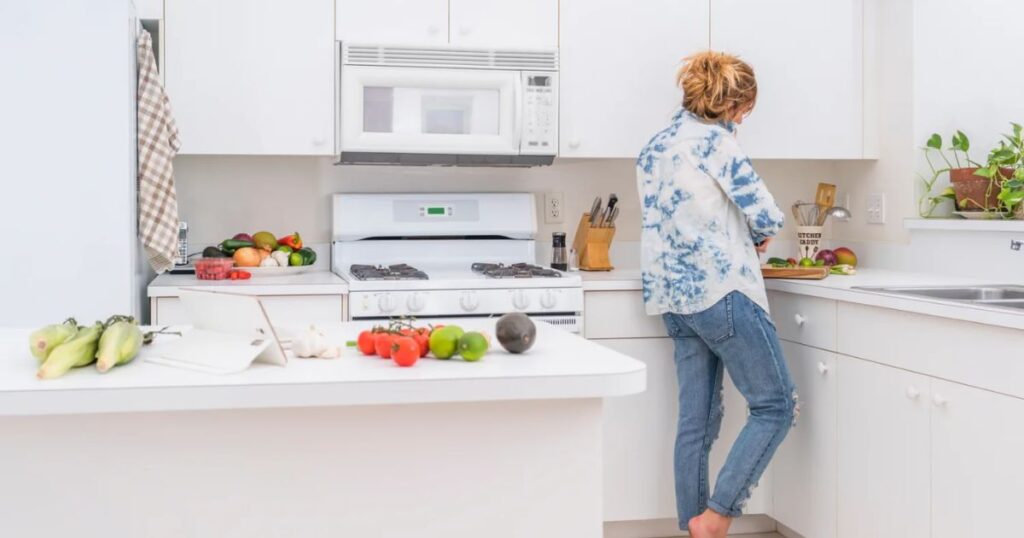
Human brains respond positively to spatial boundaries even though we don’t always consciously recognize this. Environmental psychology research shows that people feel calmer and more focused in defined spaces versus boundless areas. When a room has clear boundaries (walls, doorways, a ceiling that feels contained), our nervous systems relax slightly.
We understand where we are and what the space is for. Open floor plans create subconscious confusion because one space tries to serve multiple functions simultaneously. Your brain keeps processing: “Am I in the cooking zone? The socializing zone? The working zone?” This constant mental recalibration causes low-level stress.
Closed kitchens eliminate this cognitive burden completely. When you step into your kitchen, your brain knows exactly what mode to enter. Cooking mode. Meal prep mode. Cleaning mode. The spatial boundary reinforces the mental shift. Generational preferences play a fascinating role in the closed kitchen trend comeback too. Baby Boomers grew up with closed kitchens and many never fully embraced open concepts. Gen X experienced both layouts and can appreciate each.
Millennials bought into open floor plans heavily during their first home purchases but are now reconsidering as their families grow and needs change. Gen Z is actually embracing closed kitchens enthusiastically as they enter the housing market. They value privacy, boundaries, and defined spaces perhaps as a reaction to growing up in homes where everything was visible and connected. They want doors that close and rooms with clear purposes.
Closed Kitchens vs. Open Concepts: Making the Choice
Let’s address this honestly because no single layout suits everyone’s needs. Open floor plans absolutely have advantages in certain situations. Small homes and apartments can feel larger with fewer walls. Families with very young children benefit from being able to supervise from anywhere. People who rarely cook elaborate meals might not need a dedicated kitchen space.
If you host large gatherings frequently where many people participate in food prep together, openness helps. Single-level homes designed for aging-in-place often favor open concepts for accessibility and mobility.
However, closed floor kitchens excel in different circumstances that are increasingly common. Multi-generational households need defined spaces so people aren’t constantly in each other’s way. Homes with dedicated home offices require sound barriers between work and kitchen activities. Serious home cooks benefit from uninterrupted workspace.
Families where members work different schedules need noise containment. Anyone who values visual boundaries and defined room purposes will prefer closed kitchens. Older homes originally built with separate rooms actually work better with closed kitchens since you’re working with existing architecture rather than fighting it. Larger homes over 2500 square feet have enough space that closing off the kitchen doesn’t feel cramped. Interestingly, hybrid solutions are emerging too.
The “broken plan” concept creates semi-separation using partial walls, large openings, or sliding doors. You maintain visual connection while achieving some practical benefits of closure. Glass partitions let light flow while containing sound. Pocket doors that disappear into walls offer flexibility. You can close off the kitchen when needed but open it for gatherings. These compromises work well for people torn between both layouts.
Before designing, consult these helpful tips!
Jumping into a closed kitchen renovation without proper planning leads to expensive mistakes and disappointing results. The excitement of transformation can cloud practical thinking. You need a solid roadmap before the first wall goes up or cabinet gets ordered. The biggest mistake homeowners make? Underestimating how design choices impact daily function.
They focus on aesthetics while forgetting they’ll be working in this space daily. Beautiful but impractical doesn’t serve anyone well. Start by honestly assessing your existing architecture. Does your home’s structure naturally support a closed kitchen or are you fighting the bones of the building? Original room divisions usually make sense because architects designed with purpose. If your home originally had a separate kitchen, closing it off again probably works better than you think.
Budget considerations differ significantly for closed kitchens versus open renovations. Opening up spaces requires expensive structural work (removing load-bearing walls, adding beams, matching flooring). Closing spaces actually costs less structurally. You’re building non-structural partition walls which is relatively inexpensive.
However, your finish budget increases because you’re creating a complete room rather than a zone within a larger space. You’ll need four walls of paint or wallpaper rather than two. More cabinetry becomes possible so you might spend more on storage. Your lighting needs change since natural light from adjacent rooms won’t flow in. Timeline expectations matter too. A full closed kitchen renovation typically takes 6-12 weeks depending on scope. Structural changes add time.
Custom cabinetry can take 8-12 weeks alone. Countertops need 2-4 weeks from template to installation. Plan accordingly and don’t assume you’ll cook in your kitchen during active construction. Finding the right contractor makes or breaks your project. Not every contractor excels at closed kitchen design. Interview multiple candidates and ask specifically about enclosed kitchen experience.
Request photos of previous closed kitchen projects. Discuss your vision thoroughly and ensure they understand why you’re choosing this layout rather than open.
Consult the colors
Color selection transforms closed kitchens from potentially dark caves into bright, welcoming spaces. This might be your single most important design decision. The right colors make a small enclosed kitchen feel spacious and airy. Wrong choices create that claustrophobic feeling everyone fears. White remains the most popular choice for closed kitchens and for good reason.
It reflects maximum light, making spaces feel larger than their actual dimensions. White cabinetry paired with white walls creates a clean, fresh backdrop that never goes out of style. You can always add color through accessories, artwork, or your backsplash choice. Beige offers a warmer alternative while maintaining brightness. It creates a softer, more inviting atmosphere than stark white without sacrificing openness. Light grey delivers modern sophistication with similar light-reflecting properties.
These three colors (white, beige, light grey) should form your primary palette for walls and major elements in closed kitchans. But here’s where it gets interesting. You don’t need to play it safe everywhere. A closed kitchen actually gives you freedom to be bold in strategic spots precisely because the space is contained. Consider a feature wall in a deeper color.
Maybe one wall in sage green, deep navy, or even black for dramatic moody style impact. The backsplash becomes your playground. Since it’s a smaller surface area and contained within your closed kitchen, you can go wild. A stunning pink marble backsplash using something like Roman Flower Bardiglio & Carrara Marble Mosaic tile creates a gorgeous focal point.
Gold metallic tiles add luxury. The new Emporio Gold Nero 24×48 Tile brings sophisticated drama that might overwhelm an open floor plan but works beautifully in a defined space.
Testing paint samples becomes absolutely critical. Natural light varies dramatically throughout the day. That beige that looked perfect in the store might read too yellow at noon or too pink at sunset. Purchase sample sizes of your top three choices. Paint large swatches (at least 2 feet square) directly on your walls. Live with them for several days. Observe how they look at different times. Morning light differs from afternoon and evening illumination. If your kitchen faces north, colors will read cooler.
South-facing kitchens get warmer, more intense light. East-facing spaces have beautiful morning light but can feel dull by evening. West-facing kitchens might be dim in the morning but glow gorgeously at sunset. Your color choices need to work under all these lighting conditions. Consider the undertones carefully.
White isn’t just white. Some whites have blue undertones (reading cold and crisp), others lean warm with yellow undertones, while some carry grey undertones for a more neutral effect. These differences matter significantly in enclosed spaces where you’ll spend considerable time.
Don’t forget about the cabinetry
Your cabinetry choice impacts both function and aesthetics in profound ways. This isn’t just about pretty doors but about how your closed kitchen works daily. Storage capacity determines whether your kitchen stays organized or descends into cluttered chaos. Start by calculating your storage needs realistically.
How many dishes do you own? How many pots and pans? Do you stock up on groceries or shop frequently? Where will small appliances live? The beauty of closed kitchens is their abundant wall space for cabinetry. Take full advantage. Floor-to-ceiling cabinetry on multiple walls maximizes storage while creating a built-in, custom appearance. Upper cabinets that reach the ceiling prevent dust-collecting gaps and provide additional storage for items used less frequently.
Cabinet style should match your overall design vision. Rustic-chic spaces call for natural wood finishes or white painted wood with visible grain. Shaker-style doors with their simple, recessed panels work beautifully. Contemporary-meets-deco designs might feature flat-panel doors in high-gloss finishes or two-toned cabinetry combining white uppers with darker lowers. Industrial style pairs metal cabinets or open shelving with wood accents.
Art deco embraces geometric details, glass-front cabinets, and luxurious materials. Hardware makes a bigger statement than you’d think. Cabinet pulls and knobs are like jewelry for your kitchen. Chrome delivers classic shine. Matte black brings modern edge. Gold or brass adds warmth and luxury that’s hugely trending in 2025. Consider your finish carefully because changing hardware later is tedious.
Storage solutions within cabinetry transform functionality. Pull-out drawers for pots and pans eliminate the need to crouch and dig. Lazy Susans in corner cabinets make every inch accessible. Drawer dividers keep utensils organized. Pull-out trash and recycling bins hide unsightly necessities. Spice racks, tray dividers, and appliance garages all contribute to an organized, efficient closed kitchen.
Custom cabinetry offers ultimate flexibility but costs significantly more than stock or semi-custom options. Stock cabinets come in standard sizes and limited styles but are most affordable and immediately available. Semi-custom cabinets offer more size options and style variety at moderate prices with 6-8 week lead times.
Full custom cabinetry is built to your exact specifications in any size, style, and finish imaginable but requires 12+ weeks and premium investment. Most homeowners find semi-custom hits the sweet spot between customization and budget.
Consider Lighting
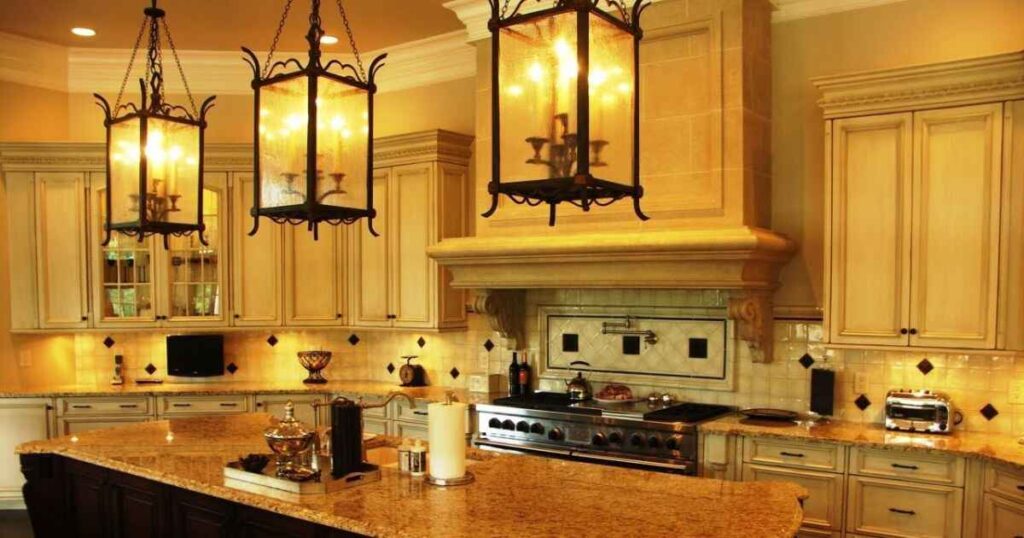
Lighting makes or breaks closed kitchens more than any other single element. Poor lighting creates dim, depressing spaces where cooking becomes difficult and accidents happen. Brilliant lighting transforms the same enclosed space into a bright, energizing room where you’ll actually want to spend time. Natural light should be your starting point. Evaluate your existing windows honestly.
Are they large enough? Well-placed? If your closed kitchen has one small window, you’ve got a problem that artificial lighting alone can’t fully solve. Consider enlarging windows or adding new ones if structurally feasible. A large window over the sink makes dishwashing less tedious. Windows flanking your oven hood provide ventilation and brightness.
Floor-to-ceiling windows on one wall flood the space with light though they reduce wall space for cabinetry so balance these competing needs.
The layered lighting approach works best in closed kitchens. This means combining three lighting types: ambient, task, and accent. Ambient lighting provides overall illumination for the entire room. Recessed ceiling lights or a central fixture handle this. In closed kitchens, you typically need more ambient lighting than in open concepts since light from adjacent rooms won’t supplement.
Plan for one recessed light per 25-30 square feet. Task lighting focuses on specific work areas where you need bright, shadow-free illumination. Under-cabinet lighting is essential for countertops where you prep food. Strip LED lights mounted under upper cabinets eliminate shadows and make chopping vegetables safer. Pendant lights over a kitchen island provide both task lighting and visual interest. Position them 30-36 inches above the surface for optimal illumination without glare.
Accent lighting adds drama and highlights design features. LED strips inside glass-front cabinets showcase dishes or glassware. Puck lights illuminate the interior of deep cabinets. Toe-kick lighting along the base of lower cabinets creates a floating effect. Under-oven hood lighting illuminates your cooking surface. Smart lighting systems offer tremendous flexibility in 2025.
You can adjust brightness throughout the day, program scenes for different activities (cooking, cleaning, entertaining), and control everything from your phone. Motion sensors turn lights on when you enter the kitchen with arms full of groceries. Dimmer switches are essential for every light circuit. Bright task lighting works for meal prep but feels harsh during morning coffee or late-night snacks. The ability to dim lights creates ambiance and versatility.
Create a Spacious Feeling
Yes, closed kitchens are by definition enclosed but that doesn’t mean they must feel cramped. Strategic design choices create an open, airy feeling even within defined walls. Start with color as discussed previously. Light colors (white, beige, light grey) reflect light and make spaces feel larger. But let’s explore beyond basic color theory. Mirrors and reflective surfaces work magic in enclosed spaces.
A mirror on one wall visually doubles your space. Your brain sees the reflection and perceives more room than actually exists. This optical illusion is powerful. If a full wall mirror feels too much (understandable in a kitchen where practicality matters), consider a large framed mirror as artwork. Mirrored backsplash tiles behind the stove create similar effects on a smaller scale.
Reflective surfaces don’t have to be actual mirrors. Glossy cabinetry finishes bounce light around the room. Polished countertops in quartz or granite have subtle reflectivity. Metallic finishes on appliances contribute shine. The Emporio Matte Calacatta Gold Tile offers a luxurious sheen without being overly shiny. Chrome or polished nickel fixtures add sparkle. Even your backsplash choice impacts spaciousness.
The White Deco Fan Glass Mosaic Tile has gorgeous reflective properties that amplify light. Glass tile generally creates more visual space than matte ceramic options. Furniture scale matters tremendously. Oversized kitchen island might look impressive but can overwhelm a closed kitchen. Choose appropriately sized elements. A slender kitchen island with open shelving underneath feels lighter than a massive solid piece. Bar stools with open backs appear less bulky than upholstered chairs.
Visual clutter makes spaces feel smaller so aggressive organization is essential. Everything needs a designated home. Countertops should be mostly clear except for daily-use items. Small appliances that live on counters (coffee maker, toaster) should be thoughtfully arranged rather than randomly placed. Consider an appliance garage (a cabinet with a door that opens to reveal your coffee station) to hide clutter while maintaining easy access.
Strategic sight lines help too. When you enter your closed kitchen, what do you see first? That’s your focal point. Make it beautiful. Perhaps a stunning backsplash using Roman Flower Bardiglio & Carrara Marble Mosaic tile draws the eye upward. Maybe a large window with a great view becomes the focus. A gorgeous range with an architectural oven hood could be your showpiece. Whatever your focal point, ensure it’s interesting enough to distract from the room’s enclosed nature.
The open shelving versus closed cabinet debate matters in closed kitchens. Open shelving creates visual lightness since you can see through to the wall. It makes spaces feel less boxed-in. However, it requires meticulous organization because everything is visible. Only choose open shelving if you’re committed to maintaining it beautifully. Otherwise, closed cabinetry might serve you better. Many homeowners opt for a combination: closed cabinetry for most storage with one wall of open shelving for displaying attractive dishes or cookbooks. This balanced approach provides both airiness and practical hidden storage.
Add Personal Touches
Your closed kitchen should reflect your personality and not just follow generic design trends. Personal touches transform a nice kitchen into your kitchen. Start by thinking about what makes you happy. What colors energize you? What objects hold meaning? What style resonates with your soul? Your backsplash offers the perfect opportunity for personal expression.
This relatively small surface area can showcase unique tile choices that might overwhelm a larger space. Love pink? A pink marble backsplash feels joyful and unexpected. Drawn to glamour? The Emporio Matte Calacatta Gold Tile brings luxury. Appreciate handmade craftsmanship? Zellige handmade ceramic tiles from Morocco offer artisanal beauty where no two tiles are exactly alike.
Collections deserve display in your closed kitchen. Vintage dishware inherited from grandparents can be showcased on open shelving. A collection of copper pots might hang from a ceiling rack. Colorful Le Creuset cookware arranged by hue creates a rainbow effect. Cookbook collections stacked on floating shelves show your culinary interests. Plants and greenery bring life into enclosed spaces.
Herbs growing on a sunny windowsill are both decorative and functional. A large potted plant in an empty corner softens the space. Trailing pothos or philodendron on top of cabinets adds organic shapes. Even small succulents on the windowsill contribute personality.
Artwork transforms closed kitchens from purely functional spaces into rooms where you genuinely want to spend time. Choose pieces that can handle kitchen conditions (humidity from cooking, temperature fluctuations, potential grease exposure). Canvas prints work better than paper. Photography in sealed frames holds up well. Metal artwork withstands conditions beautifully.
Consider food-related themes for obvious connection but don’t feel limited. Abstract art, landscapes, or family photos all work. The key is choosing pieces you love rather than safe, generic “kitchen art.”
Architectural Elements That Enhance Closed Kitchens
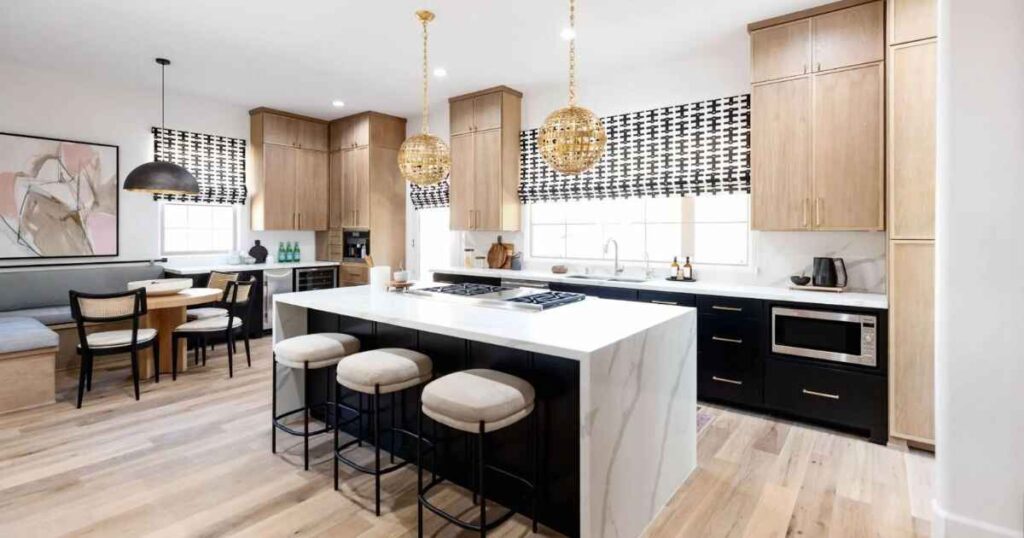
The architectural details you choose significantly impact how your closed kitchen functions and feels daily. Doorway style sets the tone immediately. Traditional hinged doors offer complete closure and privacy but require clearance space to swing. A 32-inch door needs about 5 feet of clearance for comfortable passage and opening.
Pocket doors disappear into the wall when open, saving space and creating flexibility. You get a genuine opening when desired but can close it off when needed. Installation is more complex and expensive since the wall needs internal framework but the functionality is worth considering. Barn doors have become trendy lately.
They slide on an exterior track and add rustic charm. However, they don’t seal as tightly as traditional doors so noise containment isn’t as effective. Glass-panel doors maintain visual connection while providing some sound barrier and physical separation. You can see into or out of the kitchen while still having a defined threshold.
Archways instead of standard doorframes create a softer, more elegant transition between your closed kitchen and adjacent rooms. They define the space while feeling less closed off than a door. Arched openings suit French country, Mediterranean, or rustic-chic styles particularly well. Contemporary-meets-deco spaces might feature more angular architectural details.
Pass-through windows to the dining area offer an interesting compromise. You maintain the closed walls but can pass plates or communicate easily during meals. This feature was common in homes built in the 1920s-1940s and is experiencing a revival. It provides practicality without fully opening the space.
Ceiling treatments add visual interest to closed kitchens and can make them feel more special. Coffered ceilings with recessed panels create architectural sophistication. Exposed beams bring rustic-chic or French country charm. Tray ceilings add dimension. Even painting the ceiling a different color than walls creates interest (the fifth wall theory). Many designers in 2025 are painting ceilings in soft beige or light grey rather than standard white for added warmth.
Flooring transitions between your kitchen and adjacent rooms need thoughtful consideration. Matching flooring throughout creates flow and makes spaces feel larger. Different flooring (tile in the kitchen, wood in the dining area) clearly defines boundaries. Both approaches work but serve different purposes. If using different materials, ensure the transition is intentional and clean rather than awkward.
At last, let’s review the types of tile to use in closed floor plan kitchens.
Tile selection holds enormous importance in closed floor kitchens for both practical and aesthetic reasons. Your tile choices affect how light bounces around the space, how easy maintenance is, and how the room ultimately feels. Unlike open floor plans where tile decisions impact multiple visible areas, closed kitchens let you make bolder choices since the selection affects only one contained room.
This freedom is liberating. You can choose tiles you love without worrying about coordination with your living room or dining area aesthetics.
Current tile trends for 2025 embrace several directions simultaneously. Large-format tiles (24×48 inches or larger) create fewer grout lines and make spaces feel more expansive. Textured tiles add tactile interest and dimension. Wood-look tiles like the Japandi Maple Wood 8×48 Tile bring warmth without wood’s maintenance concerns.
Bold patterns and colors are having a moment after years of neutral dominance. Handcrafted tiles with intentional imperfections feel special in a mass-produced world. Metallic glass backsplash tiles are surging in popularity for their light-reflecting properties and glamorous appearance.
| Tile Type | Price Range (per sq ft) | Durability | Maintenance | Best For |
| Porcelain | $3-$20 | Excellent | Low | Floors, walls, backsplash |
| Ceramic | $1-$15 | Good | Low | Walls, backsplash |
| Metallic Glass | $15-$40 | Good | Moderate | Backsplash only |
| Natural Stone | $10-$50 | Varies | High | Countertops, backsplash |
| Zellige Handmade | $20-$60 | Good | Moderate | Backsplash, accent walls |
Budget ranges vary significantly across tile types so understanding these differences helps planning. Porcelain tile and ceramic tile offer affordability while metallic glass backsplash tiles and handmade options command premium prices. Installation costs add $5-$15 per square foot depending on tile complexity, pattern, and your location.
Conclusion
The closed kitchen trend comeback proves that thoughtful boundaries enhance modern living. As we move through 2025, homeowners increasingly value privacy, quiet, and defined spaces over endless openness. Whether you choose white cabinetry with metallic glass backsplash tiles or rustic-chic warmth with Japandi Maple Wood 8×48 Tile, your closed kitchen becomes a personal sanctuary.
This isn’t about reversing progress but embracing smarter design that serves real needs. Trust your instincts, plan carefully, and create a closed floor kitchen that brings daily joy. Your perfect cooking haven awaits behind those beautiful doors.
FAQ, S
What is the main advantage of a closed kitchen over an open floor plan?
The primary benefit is superior noise reduction and privacy, allowing you to cook without disrupting other household activities or feeling watched during meal preparation.
Do closed kitchens make homes harder to sell?
Well-designed closed kitchens appeal to serious cooks, remote workers, and families who value defined spaces, often selling comparably to open floor plans.
How can I prevent my closed kitchen from feeling dark and cramped?
Use light grey or white cabinetry, install layered lighting (ambient, task, and accent), add large windows, and choose reflective surfaces like metallic glass backsplash tiles.
What’s the average cost to convert an open kitchen to a closed layout?
Converting an existing open floor plan to a closed kitchen typically costs $8,000-$25,000, depending on wall construction, door installation, and finishing details required.
Are closed kitchens suitable for families with young children?
Yes, closed kitchens offer safety advantages by allowing you to secure the space with a closed door, while baby monitors or glass-panel doors maintain supervision when needed.